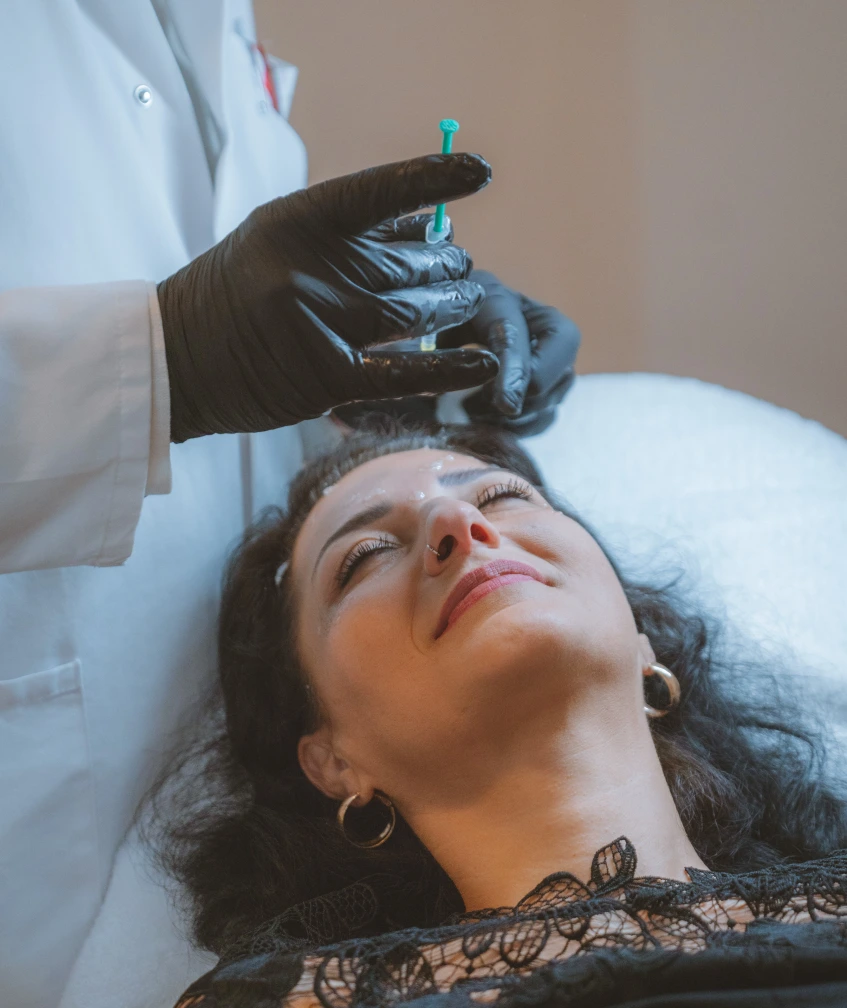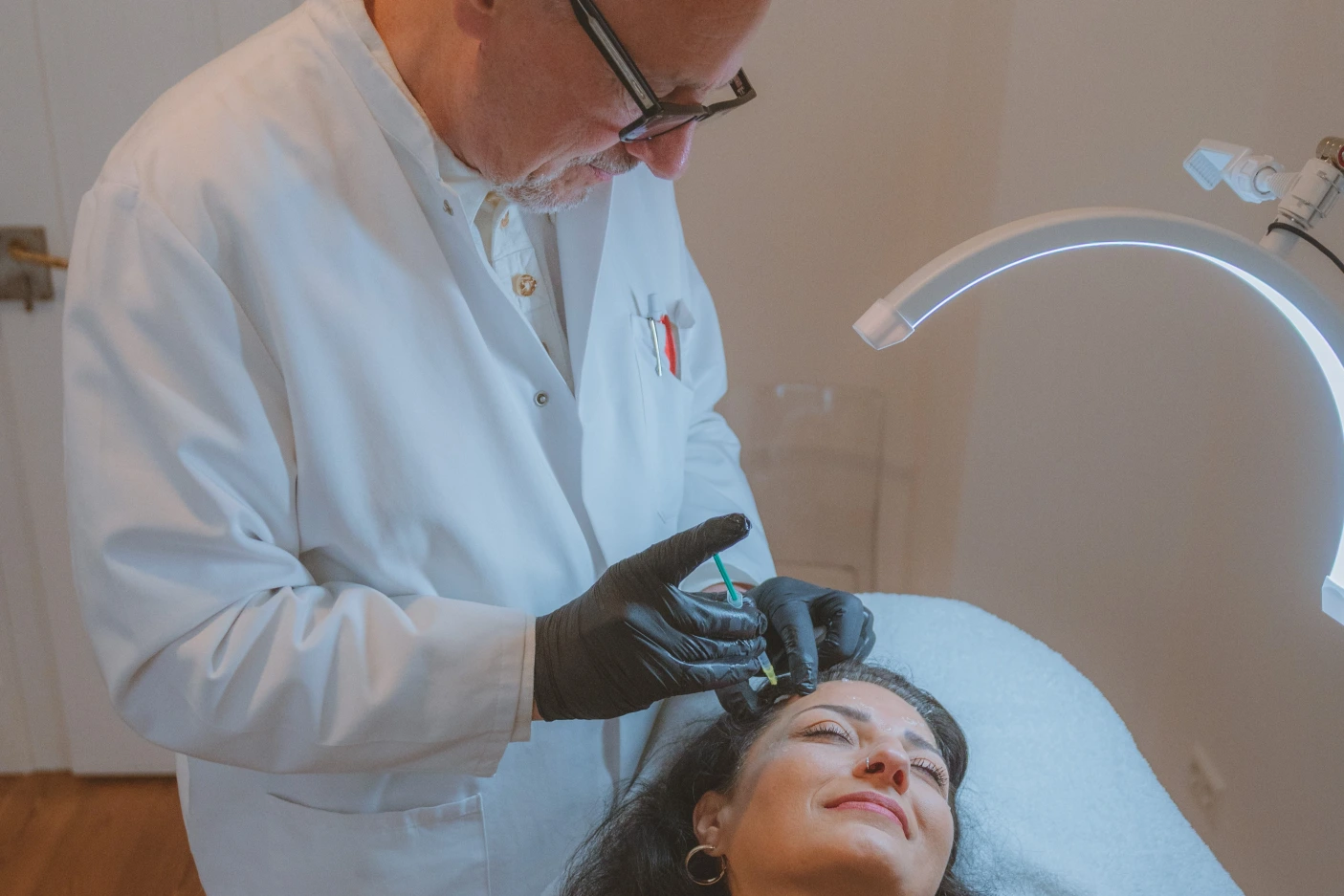


Immediately after treatment
The first look in the mirror is not the final result
Lips rarely look immediately after hyaluronic acid treatment as they will once healing has settled. Early volume is not produced by the gel alone. Needle entry points, small bruises, local anaesthetic and temporary fluid retention can make the lips look larger, firmer or uneven.
Small areas of firmness may also be felt during the first days. The number of days alone does not determine whether a finding remains within an expected course. Direction matters: swelling should become calmer, pressure and tenderness should decrease, and skin colour should remain normal. Increasing pain, warmth, redness or colour change requires assessment.
Why lips react
Swelling has more than one cause
Lip tissue is mobile, well supplied with blood and surrounded by soft tissue. Even a small amount of oedema is therefore more visible than in many other facial areas. Product properties, volume, injection plane, technique and individual susceptibility all influence severity and duration.
Product information for approved fillers repeatedly lists swelling, tenderness, firmness and palpable irregularities among common local reactions. Many reactions settle substantially within about two weeks, although mild findings can last longer. These time frames never justify waiting when pain is increasing or the skin colour becomes unusual.
What affects severity and duration
 Product and gel properties
- Volume and areas treated
- Injection plane and technique
- Tendency to swelling or bruising
- Previous filler treatments
- Medicines, inflammation or infection
A time-based guide
What may be seen during the first four weeks
Time provides context, but pain, skin colour and the overall direction of change remain more important.
01 · First 24 hours
Fuller and temporarily uneven
Pressure, tenderness, pinpoint redness, small bleeds, bruising and temporary numbness may occur.
02 · Days 1 to 3
Swelling and bruising may become more visible
Early asymmetry is difficult to judge while one side is more swollen or bruised than the other.
03 · Days 4 to 7
A downward trend should be apparent
Residual swelling and small palpable areas can remain, but symptoms should not steadily intensify.
04 · Around two weeks
Shape and contour become more reliable
Most early swelling is often much calmer, making a clinical review more meaningful.
05 · Weeks 3 to 4
Residual findings should remain stable or decrease
New or enlarging nodules after a quiet period require medical review rather than further waiting.
Assessing lumps correctly
Timing, visibility, pain and skin findings guide the assessment
More compatible with an early reaction
Small, non-painful areas that are felt rather than seen and become softer as swelling settles.
Arrange a timely review
Visible or persistent irregularities, increasing firmness, tenderness or a finding that does not improve.
Seek same-day assessment
Increasing pain, marked redness or warmth, discharge, fever, colour change or rapidly increasing swelling.
Take delayed nodules seriously
A new nodule appearing weeks or months later can reflect several causes and requires examination.
Asymmetry
Uneven swelling does not automatically mean uneven treatment
Faces and lips are rarely fully symmetrical before treatment. One-sided swelling, bruising or anaesthetic can temporarily accentuate an existing difference. Baseline photographs and changes over several days are more useful than a single early selfie.
A suddenly increasing one-sided change with pain, numbness or abnormal skin colour is not routine asymmetry and should be assessed immediately.
Warning signs
When not to wait for the routine review
Severe or increasing pain, pale, grey, bluish or mottled skin, a cool area, rapidly increasing swelling, persistent warmth and redness, discharge or fever require urgent medical assessment. Visual disturbance, severe headache, weakness, speech difficulty, breathing problems or swelling of the tongue and throat are emergencies.
Emergency symptoms
For visual, neurological or airway symptoms, call emergency services immediately: 112 in Germany.
Aftercare
Do not try to correct the early phase yourself
Product-specific instructions from the treating practice take priority. Cooling should be gentle, separated from the skin by fabric and applied without firm pressure. Do not knead, squeeze or massage the lips unless this has been specifically recommended after examination.
Do not start antibiotics, steroids, hyaluronidase or other medicines on your own. Prescribed anticoagulants must not be stopped independently for an aesthetic appointment. Contact the treating practice when symptoms increase rather than waiting for the scheduled review.
Useful information for a review
- Treatment date and areas treated
- Product name and volume
- Onset of swelling, pain or lumps
- Comparable photographs over several days
- Medicines, allergies and previous fillers
Frequently asked questions
Swelling and lumps after lip filler
How long do lips remain swollen?
Swelling often decreases substantially during the first week and is usually much calmer within one to two weeks. Increasing symptoms require assessment regardless of the day.
Are small lumps normal?
Small non-painful irregularities may occur early. Visible, enlarging, painful or inflamed nodules require medical review.
When can the result be assessed?
A more reliable assessment is often possible after about two weeks, although tissue feel can take longer to settle.
Should lumps be massaged?
Not without a specific medical instruction. The correct approach depends on the cause and the examination.
Should filler be dissolved immediately?
Not every early irregularity is misplaced filler. Suspected vascular compromise, however, requires immediate treatment.
Can lip herpes occur afterwards?
Lip injections can trigger a recurrence in susceptible people. A history of recurrent cold sores should be discussed before treatment.
Summary
The direction of change is the key distinction
Early swelling, pressure and small palpable irregularities can be part of an expected course. Reassurance comes from symptoms decreasing overall and from the absence of abnormal skin colour, increasing pain or systemic signs.
Increasing pain, colour or temperature change, discharge, fever, visual or neurological symptoms, or a new nodule after a quiet interval require assessment. For visual, neurological or airway symptoms, call 112.
More consistent with expected recovery
Early onset, mild to moderate symptoms, normal skin colour and an overall improving course.
Do not wait
Progression, unusual pain, colour change, warmth, discharge, fever, delayed nodules or visual, neurological or airway symptoms.
Updated August 2026. This article provides general medical guidance and does not replace an individual examination.
Sources
Selected medical references
Product-specific study data cannot automatically be transferred to every filler. Warning signs and delayed reactions also require current clinical assessment.
Bodywise Heidelberg
Consultation, treatment and follow-up in one practice
Before lip treatment, anatomy, previous procedures, medicines, realistic goals, aftercare and review arrangements are discussed medically.